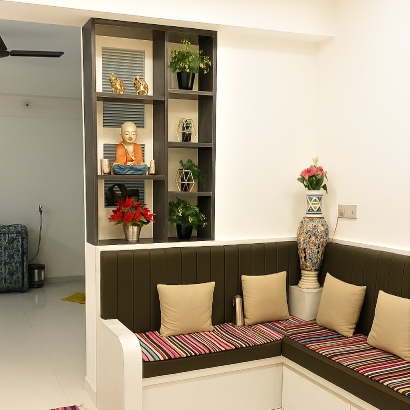
Residential interiors focus on designing and enhancing living spaces to reflect the homeowner’s lifestyle, comfort, and personality. It includes the interior planning and decoration of homes such as apartments, villas, and bungalows.
Emphasis on comfort, functionality, and personal style
Spaces include living rooms, bedrooms, kitchens, and bathrooms
Use of warm colors, soft lighting, and home-friendly materials
Often incorporates custom furniture and decor elements
Residential Interiors
Residential interiors focus on creating comfortable, functional, and personalized living spaces. Design elements reflect the homeowner’s lifestyle and often prioritize warmth, aesthetics, and relaxation in areas like bedrooms, living rooms, and kitchens.
Commercial Interiors
Commercial interiors are designed to support business goals, enhance workflow, and reflect brand identity. These spaces, such as offices, retail stores, and restaurants, emphasize efficiency, durability, and a professional atmosphere.
Commercial Interiors
Commercial interiors are designed to support business functionality and brand identity. These spaces include offices, retail stores, restaurants, and hotels, where both aesthetics and efficiency are essential.
Focus on productivity, brand image, and customer experience
Includes office layouts, conference rooms, reception areas
Durable materials, modular furniture, and efficient lighting used
Differences and Design Approach
While both types aim to optimize space and aesthetics, the goals and design approaches vary greatly. Residential design prioritizes comfort and personalization, whereas commercial design targets functionality, flow, and business needs.
Purpose: Living comfort vs. operational efficiency
Design: Personal expression vs. professional branding
Materials: Cozy and decorative vs. durable and functional
Space Use: Relaxation and family life vs. business operations and customer flow.
Lighting: Mood-enhancing and ambient vs.Task-focused and impactful
Technology: Smart living convenience vs. Integrated automation and digital tools